
What Happens During an In-Person Reiki Healing Session

The part nobody tells you before your first session
Most people book their first Reiki session with real curiosity and a quiet bit of nervousness. They want to feel calmer, and they also want to know exactly what will happen in that room.
That is a fair thing to want. The answer turns out to be far less mysterious than the word "energy work" suggests.
Here is a plain walk-through of an in-person Reiki Healing Session in Madison Heights, step by step, so nothing has to be a surprise.
What Reiki is, in ordinary language
Reiki is a Japanese energy practice that developed in the early twentieth century. A practitioner rests their hands lightly on or just above the body and works with the energy moving through you.
Nothing is pushed into you and nothing is taken out of you. The practice is gentle, quiet, and it asks almost nothing of you except that you lie still and breathe.
Reiki supports relaxation, emotional balance, and a sense of being settled in your own body. It sits alongside care from a doctor or mental health professional rather than taking its place.
Before you arrive
Wear clothes you can rest in comfortably. Soft layers work well, because bodies often cool down once they relax, and you may want a blanket over you.
Eat something light beforehand so hunger does not pull your attention. Drink water during the day, and skip the extra coffee if you can, because caffeine makes stillness harder.
Give yourself a little space on the other side of the appointment too. Scheduling a session between two stressful errands works, but it works much better when you can drive home slowly.
The first few minutes: we talk
Every session starts with a conversation, not with hands. You get asked what brought you in and what has been sitting heavily on you lately.
You do not need a polished answer. "I am exhausted and I do not know why" is a perfectly good place to begin.
This is also when you mention anything physical worth knowing, such as a sore shoulder, a recent surgery, or an area you would rather no one touch. Consent gets discussed plainly, and you can change your mind at any point.
On the table
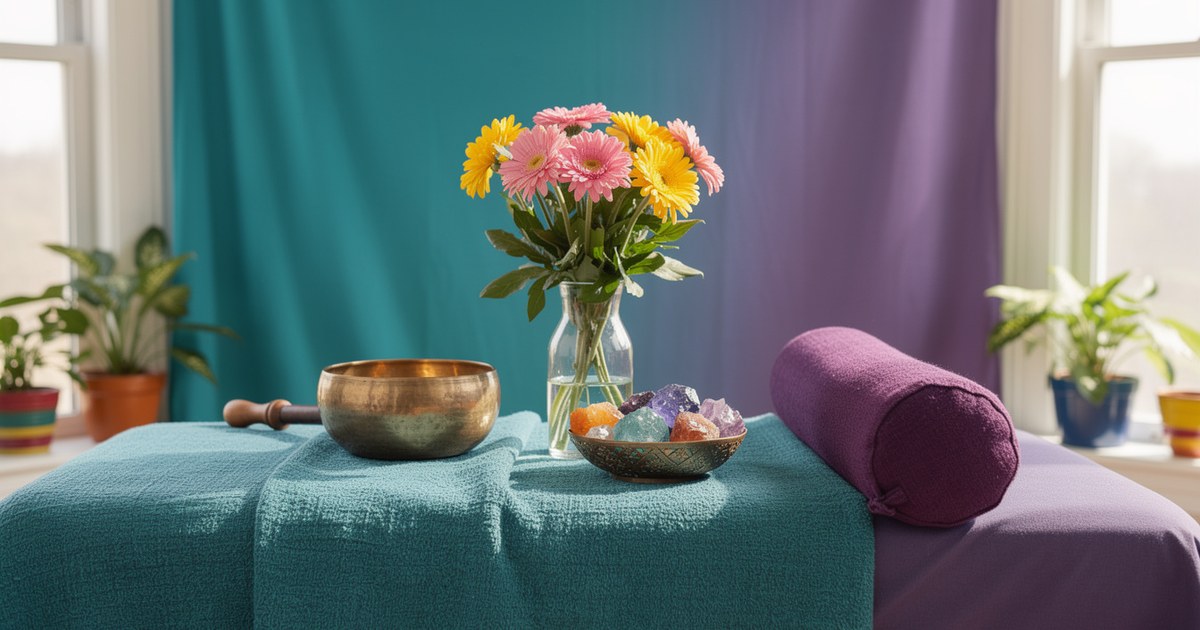
You lie down on a cushioned table, fully clothed, usually face up, with a bolster under your knees if that helps your lower back. Shoes come off and that is all.
A blanket goes over you if you want one. Music often plays softly in the background, and many people find that a low, steady track helps the mind stop narrating.
Then the hands begin. The practitioner moves slowly through a sequence of positions, resting lightly on or just above the head, shoulders, chest, abdomen, knees, and feet.
Each position holds for a few minutes. There is no rubbing, no pressing, and no manipulation of muscles or joints, so this is not a massage.
What people usually notice
Sensations vary widely from person to person and even from session to session. None of these are requirements, and none of them mean you are doing it correctly or incorrectly.
- Warmth or heat coming from the hands, sometimes surprisingly strong
- Tingling, pulsing, or a feeling of water moving through an area
- Heaviness, as though the table has pulled you downward
- Colors, images, or old memories drifting up behind closed eyes
- A deep yawn, a growling stomach, or a sudden sigh as the body lets go
- Tears that arrive without a story attached to them
- Falling asleep, which is extremely common and completely fine
Some people feel very little their first time. That usually means the nervous system is still deciding whether this room is safe, and it often shifts by the second or third visit.
Chakras, and where they fit
You may hear the word chakra during or after a session. The chakras are seven traditional energy centers running from the base of the spine to the crown of the head.
A Reiki practitioner may notice that one area feels dense, quiet, or unusually active under the hands. That is an observation about energy, not a reading of your health.
If chakra awareness interests you, it makes a good doorway into home practice. Breathing into one center for two minutes a day teaches you a great deal about your own patterns.
The last few minutes
When the hand positions finish, you get a few quiet minutes to come back at your own speed. Sitting up too fast after deep rest leaves most people lightheaded.
You drink water, and then you talk briefly about what you noticed. Sharing is invited rather than required, and plenty of people simply say "that was nice" and go home.
Afterward, drink more water than usual and keep the evening gentle. Some people sleep unusually well that night, and some feel tender or emotional for a day as things settle.
Who an in-person session tends to suit
People who carry stress in the jaw, neck, and shoulders often find the table a relief. So do highly sensitive people and empaths who absorb a room and then cannot put it down.
It also suits anyone in a loud chapter of life, such as a move, a loss, a new job, or a long stretch of caregiving. You do not need a crisis to deserve an hour of rest.
If touch feels like too much right now, say so. Hands can hover a few inches above the body for the entire session, and distance work exists for the same reason.
Carrying the calm home
The quiet after a session is worth protecting for a day or two. Many people pair it with simple home practices, such as opening windows, playing low music, or misting an aura spray through a room that has felt stale.
Flower essences fit here too. They are gentle vibrational preparations made from flowers, and people reach for them between sessions to support emotional balance during ordinary weeks.
None of that is required. A glass of water, an early bedtime, and a walk around the block carry the calm perfectly well on their own.
Frequently Asked Questions
Do I have to take my clothes off for Reiki?
No. You stay fully clothed for the entire session and only remove your shoes, so wear soft layers you can rest comfortably in.
What if I fall asleep on the table?
Falling asleep is common and nothing goes wrong when it happens. Your body still rests deeply, and many people report their best sleep in weeks that same night.
What if I do not feel anything at all?
Feeling little is normal, especially the first time. Notice how you sleep and how you handle small frustrations over the following days, because the shift often shows up there first.
Is Reiki tied to a particular religion?
No. Reiki has Japanese spiritual roots, and people of every faith and of no faith practice and receive it without conflict.
Curious what an hour on the table feels like?
Reach out with any question about the session before you book, no matter how small it seems. You can also see what workshops and sound baths are coming up in Madison Heights.
Ask Rev. Michael See Upcoming Events📅 Upcoming Events
- Nov 4 The Gathering Table: A Women’s Wellness & Connection Evening
- Nov 5 Money Elixir Workshop
- Nov 8 Scorpio New Moon Sound Bath: Descent & Return | Madison Heights, MI
- Nov 17 Celestial Resonance Soundbath Journey | Shelby Township, MI
- Nov 19 Crystal Magic 101: Your First Step Into Sparkle with Michael Allison
Book This Session
Sessions with Rev. Michael Allison, a Certified Flower Essence Practitioner. Tap a session to see what it involves.

Related Articles
The Four Kinds of Healing Session, and How to Tell Them Apart
Reiki, crystal, holistic and specialized. The names sound interchangeable and they are not. What actually differs between them.

How a Reiki Attunement Works and How to Choose One
A Reiki attunement is a short ceremony in which a teacher opens your energy pathways so you can practice Reiki with your own hands. Here is what...

Distance Reiki Attunements: How Energy Healing Works Across Any Distance
A distance Reiki attunement opens your energy channels from anywhere in the world. Here is how it works, what to expect, and how to begin.